
Last Updated on February 20, 2026 by admin
Issued by the Professor Ademola Ojo Emmanuel Foundation
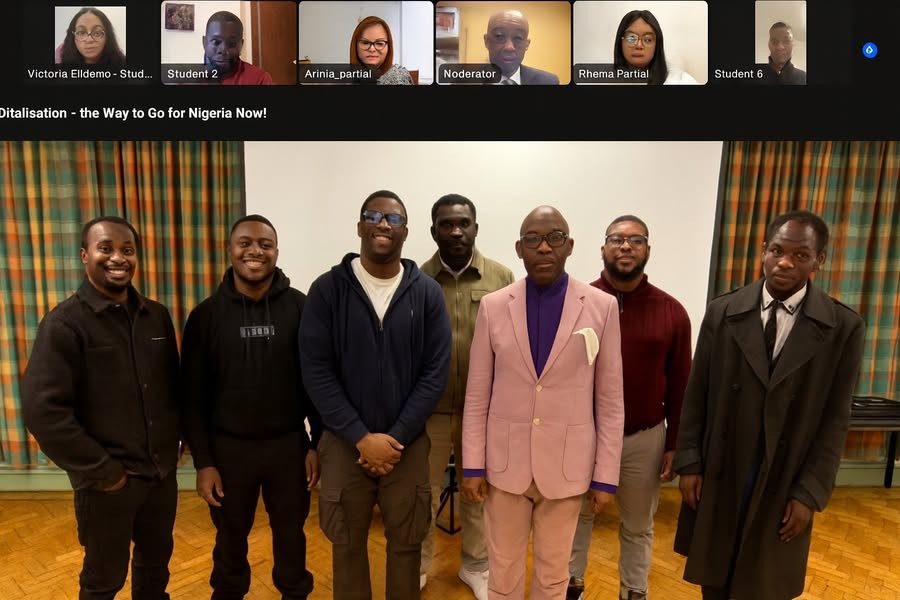
Following the National Online Workshop on “Digitalisation – The Way to Go for Nigeria Now!” Held on Wednesday, 18 February 2026
The Professor Ademola Ojo Emmanuel Foundation hereby issues this official communiqué following the successful hosting of its national online workshop titled “Digitalisation – the Way to Go for Nigeria Now!”, convened on Wednesday, 18 February 2026 and coordinated live from London by Professor Ojo Emmanuel Ademola, Nigeria’s pioneering Professor of Cybersecurity and Information Technology Management.
The workshop brought together a broad spectrum of stakeholders from government, academia, civil society, the private sector, and the Nigerian diaspora. Participants engaged in a substantive national dialogue on the urgent need to accelerate Nigeria’s digital transformation as a pathway to integrity, efficiency, and inclusive development.
After extensive deliberations, the following resolutions and commitments were adopted:
1. Digitalisation as a National Imperative
Participants unanimously affirmed that digitalisation is no longer optional but a strategic necessity for Nigeria’s governance, economic competitiveness, and social progress. The workshop recognised that digital transformation must be elevated to a national priority requiring coordinated action across all arms and levels of government.
2. Strengthening Digital Governance and Public Sector Efficiency
The workshop resolved that Nigeria must modernise its public service through the adoption of interoperable systems, streamlined workflows, and citizen‑centred digital platforms. Participants emphasised the need for unified service portals, automated processes, and data‑driven decision‑making to reduce delays, eliminate bottlenecks, and improve service delivery.
3. Embedding Integrity and Anti‑Corruption Technologies
Stakeholders agreed that digital tools—particularly e‑procurement, digital payments, and analytics—are essential for combating corruption. The communiqué calls for the expansion of integrity‑tech solutions across ministries, departments, and agencies, with full transparency in procurement, payroll, and public finance management.
4. Building Robust Digital Public Infrastructure
The workshop emphasised the importance of secure cloud environments, integrated digital identity systems, and modern data governance frameworks. Participants stressed that digital public infrastructure must be resilient, inclusive, and capable of supporting nationwide service delivery.
5. Developing Digital Skills and Civil Service Capacity
The communiqué underscores the urgent need for a national digital fluency framework for public servants. Participants recommended role‑specific training for procurement officers, auditors, judges, legislative drafters, and frontline administrators. Digital leadership development for senior officials was identified as a critical enabler of reform.
6. Advancing Judicial and Legislative Digitisation
The workshop resolved that the judiciary and legislature must accelerate their digital transformation. Key priorities include electronic filing, virtual hearings, digital evidence management, machine‑readable legislative records, and structured drafting tools. These reforms were recognised as essential for strengthening justice delivery and legislative transparency.
7. Economic, Social, and Environmental Benefits of Digitalisation
Participants acknowledged that digitalisation can significantly reduce the cost of governance, expand SME participation, improve revenue collection, and enhance the investment climate. The communiqué also notes the environmental benefits of reduced paper use, lower travel demands, and more efficient resource utilisation.
8. Commitment to Continued Engagement and Collaboration
The Foundation and participants are committed to sustained collaboration in advancing Nigeria’s digital transformation agenda. The communiqué affirms that digitalisation requires multi‑stakeholder partnerships, continuous learning, and shared responsibility across sectors.
9. Next Steps and Follow‑Up Actions
The Professor Ademola Ojo Emmanuel Foundation will:
– Publish a comprehensive post‑workshop report detailing recommendations and action points.
– Convene follow‑up sector‑specific dialogues and capacity‑building sessions.
– Engage policymakers and institutions to support the implementation of digital governance reforms.
– Continue to champion digital empowerment, ethical leadership, and national development.
Conclusion
The workshop concluded with a renewed sense of urgency and optimism. Participants affirmed that Nigeria possesses the talent, capacity, and opportunity to build a modern, transparent, and digitally enabled state. The Foundation reiterates that digitalisation remains one of the most powerful tools for shaping a Nigeria that works for every citizen.
Issued this day,
Friday, 20 February 2026
Professor Ademola Ojo Emmanuel PAOEF – Professor Ademola Ojo Emmanuel Foundation